Kiswahili World Language Day: Why It Matters Globally
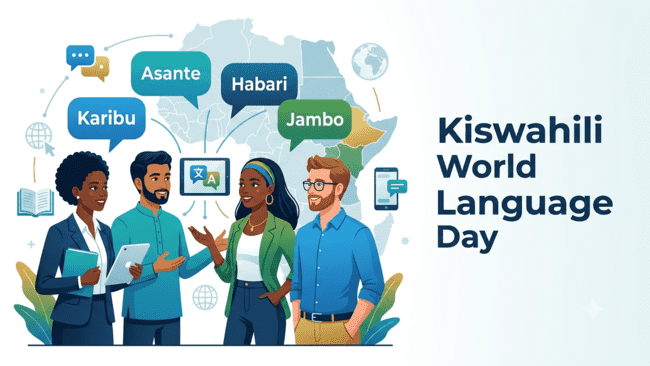 Every year on July 7, the world celebrates Kiswahili World Language Day, recognizing one of Africa’s most influential and widely spoken languages. More than a cultural celebration, the day highlights Kiswahili’s growing importance in international communication, education, diplomacy, business, and sustainable development.
As globalization continues to reshape international markets, organizations are increasingly looking beyond traditional languages to engage diverse audiences. Kiswahili has emerged as a critical language for companies expanding into East Africa, international development organizations working across the continent, and institutions seeking meaningful engagement with millions of Swahili speakers.
Recognized by UNESCO as the first African language to receive an International Language Day, Kiswahili represents far more than a means of communication. It serves as a bridge connecting cultures, facilitating trade, supporting regional integration, and preserving a rich linguistic heritage shared across multiple nations.
At Globalization Partners International (GPI), we understand that successful multilingual communication requires more than word-for-word translation. Reaching Swahili-speaking audiences demands linguistic expertise, cultural understanding, industry knowledge, and localization strategies that ensure your message resonates naturally and accurately.
Whether you’re entering East African markets, translating healthcare information, localizing software, or communicating with international stakeholders, professional Swahili translation and localization services help ensure your content is accurate, culturally appropriate, and impactful.
In this blog, we’ll explore the significance of Kiswahili World Language Day, why Kiswahili continues to grow as a global language, and how professional language solutions help organizations communicate effectively with millions of Swahili speakers worldwide.
What Is Kiswahili World Language Day?
Kiswahili World Language Day is an annual observance held on July 7 to celebrate the Kiswahili language, promote its cultural significance, and recognize its role in fostering communication, education, peace, and sustainable development across Africa and beyond.
Why UNESCO Recognized Kiswahili
Why Is It Celebrated?
UNESCO officially proclaimed July 7 as World Kiswahili Language Day in 2021, making Kiswahili the first African language to receive an internationally recognized language day.
The celebration acknowledges Kiswahili’s unique contribution to:
- Cultural preservation
- Regional cooperation
- International diplomacy
- Education
- Economic development
- Cross-border communication
The date itself holds historical significance. July 7 (“Saba Saba,” meaning “seven seven” in Kiswahili) has long been associated with important historical and political events in East Africa, particularly in Tanzania.
Today, Kiswahili World Language Day brings together governments, educational institutions, cultural organizations, businesses, translators, and language professionals to celebrate the language’s continued growth and influence around the world.
UNESCO’s recognition reflects the language’s remarkable international importance.
Unlike many regional languages, Kiswahili functions as a lingua franca, enabling communication among hundreds of ethnic groups with different native languages. It promotes social inclusion, supports access to education, facilitates international cooperation, and strengthens regional integration across East Africa.
The recognition also aligns with UNESCO’s broader mission of preserving linguistic diversity while promoting multilingual education and intercultural dialogue.
Why Kiswahili Matters
Kiswahili is much more than one of Africa’s largest languages; it is one of the world’s fastest-growing languages for commerce, education, diplomacy, and digital communication.
More Than 200 Million Speakers
Linguists estimate that over 200 million people speak Kiswahili as either a first or second language.
While native speakers number in the tens of millions, the majority use Kiswahili as a common language for communication across different ethnic and linguistic communities.
Its widespread adoption has made it one of Africa’s most important languages for:
- Government communication
- Cross-border trade
- Education
- Healthcare
- Media
- Tourism
- International development
- Digital content
As internet access continues expanding throughout Africa, demand for localized Kiswahili content is also increasing rapidly.
Countries Where Kiswahili Is Spoken
Kiswahili is spoken across a broad geographic region, including:
- Tanzania
- Kenya
- Uganda
- Democratic Republic of the Congo
- Rwanda
- Burundi
- Mozambique
- Zambia
- Malawi
- Comoros
- South Sudan
Swahili-speaking communities can also be found throughout the Middle East, Europe, North America, and other regions through migration and international business.
This extensive geographic reach makes Kiswahili an essential language for organizations operating across East Africa.
A Language of Regional Integration
Kiswahili plays a central role within regional organizations, including the African Union and the East African Community.
As countries strengthen economic partnerships and improve regional mobility, Kiswahili helps facilitate:
- Trade negotiations
- Government collaboration
- Public communication
- Educational exchange
- Infrastructure development
Its ability to bridge linguistic diversity makes it invaluable for multinational organizations working across East Africa.
A Language of Culture and Innovation
Kiswahili is deeply connected to East Africa’s rich cultural heritage.
It is widely used in:
- Literature
- Music
- Television
- Radio
- Film
- Journalism
- Social media
- Mobile applications
- Online education
As African digital economies continue to expand, businesses increasingly recognize the importance of creating localized experiences in Kiswahili to better serve consumers and strengthen customer engagement.
Why Businesses Should Communicate in Kiswahili
For organizations expanding into East Africa, language is one of the most important drivers of trust, customer engagement, and long-term success.
While English is widely used in some sectors, communicating with audiences in their preferred language creates stronger relationships and improves business outcomes.
Build Customer Trust
Customers are significantly more likely to engage with brands that communicate in their native or preferred language.
Professional Kiswahili translation helps businesses:
- Improve credibility
- Increase customer confidence
- Reduce misunderstandings
- Enhance customer experience
- Strengthen brand loyalty
Language demonstrates respect for local culture, and customers notice the difference.
Expand Into Growing Markets
East Africa is home to some of the world’s fastest-growing economies.
Companies entering industries such as:
- Healthcare
- Banking
- Manufacturing
- Telecommunications
- Education
- Agriculture
- E-commerce
- Tourism
Can benefit greatly from localized Kiswahili communication.
From websites and product documentation to mobile apps and marketing campaigns, speaking the language of your customers supports sustainable market expansion.
Improve User Experience
Localization goes beyond translation.
Professional Swahili localization adapts:
- User interfaces
- Mobile applications
- Software
- E-learning platforms
- Marketing campaigns
- Product documentation
To ensure they feel natural and culturally appropriate for local audiences.
A seamless user experience can improve customer satisfaction, increase conversions, and reduce support requests.
Support Healthcare and Public Communication
Healthcare organizations, NGOs, and public institutions rely on accurate Kiswahili translation to communicate essential information.
Examples include:
- Patient education materials
- Medical consent forms
- Public health campaigns
- Emergency communications
- Vaccination guidance
- Disease prevention resources
In these contexts, linguistic accuracy is not simply beneficial; it is essential for public understanding and safety.
Enable Effective Government and NGO Outreach
Governments and international organizations frequently use Kiswahili when delivering information related to:
- Elections
- Public services
- Community development
- Humanitarian aid
- Environmental initiatives
- Education programs
Clear, culturally appropriate communication helps improve participation, reduce misinformation, and build stronger connections with local communities.
Increase Global Competitiveness
Businesses that invest in multilingual communication are better positioned to compete internationally.
Professional Kiswahili translation supports:
- International partnerships
- Cross-border trade
- Investor communication
- Regulatory compliance
- Customer acquisition
- Brand reputation
Rather than treating language as an afterthought, leading global organizations recognize localization as a strategic investment that contributes directly to growth.
Common Translation Challenges in Kiswahili
While Kiswahili is widely spoken across East Africa, producing high-quality translations requires much more than linguistic fluency. Professional translators must understand regional language preferences, cultural expectations, industry-specific terminology, and the communication goals of the target audience.
Regional Variations
Although Standard Kiswahili provides a common foundation, vocabulary, spelling preferences, and expressions can vary across countries and regions. A phrase that sounds natural in Tanzania may differ slightly from one commonly used in Kenya or the Democratic Republic of the Congo.
Experienced linguists consider factors such as:
- Target country or region
- Intended audience
- Formal versus informal tone
- Local terminology
- Government or institutional language preferences
This ensures translated content feels authentic rather than generic.
Cultural Adaptation
Successful communication depends on cultural relevance as much as linguistic accuracy.
Professional localization adapts:
- Marketing messages
- Product names
- Calls to action
- Examples and imagery
- Dates, numbers, and measurements
- Humor and idioms
Rather than translating words literally, localization preserves the intent and impact of the original message while making it meaningful for local audiences.
Technical Terminology
Industries such as healthcare, manufacturing, engineering, finance, and information technology rely on highly specialized terminology. Incorrect translations can lead to confusion, compliance issues, or operational risks.
Professional translators work with approved glossaries, terminology databases, and subject matter experts to ensure consistency and accuracy across all content.
Medical and Legal Translation
Medical and legal documents require exceptional precision. Whether translating patient information, pharmaceutical documentation, contracts, or regulatory filings, even minor errors can have significant consequences.
Professional language providers implement rigorous quality assurance processes, including translation, editing, proofreading, and terminology review, to help minimize risk.
Marketing Localization
Marketing content should inspire action, not simply convey information.
Effective Swahili marketing localization considers:
- Brand voice
- Cultural expectations
- Consumer behavior
- Local idioms
- Emotional tone
- Search behavior
This helps brands build trust while maintaining a consistent global identity.
Professional Swahili Translation vs. AI Translation
The Limits of Machine Translation
AI-powered translation tools have improved considerably and can be valuable for understanding the general meaning of simple content or accelerating internal workflows.
However, machine translation may struggle with:
- Cultural nuances
- Industry terminology
- Idiomatic expressions
- Context-dependent wording
- Brand messaging
- Sensitive legal or medical content
For customer-facing or high-stakes communication, human expertise remains essential to ensure clarity, accuracy, and cultural appropriateness.
AI has transformed multilingual workflows, but it is not a one-size-fits-all solution. The most effective approach often combines AI with professional human review, particularly for content where accuracy, compliance, or brand reputation is critical.
| Criteria | Professional Swahili Translation | AI Translation |
|---|---|---|
| Accuracy | High, with human review and quality assurance | Good for straightforward text but may miss context |
| Cultural nuance | Adapts naturally to local audiences | Limited understanding of cultural context |
| Legal documents | Suitable for contracts, compliance, and certified translations | Not recommended without professional review |
| Medical content | Reviewed by specialized linguists | Risk of terminology or contextual errors |
| Marketing content | Preserves brand voice and persuasive messaging | Often produces literal translations |
| Confidentiality | Managed under secure workflows and confidentiality agreements | Depends on the platform and data policies |
| Consistency | Uses terminology management and style guides | May vary between translations |
| Best use cases | Customer-facing, regulated, and business-critical content | Draft translations, internal communication, and productivity support |
Finding the Right Balance
AI translation can help organizations increase efficiency and reduce turnaround times for certain types of content. However, when communicating with customers, patients, government agencies, or business partners, professional review helps ensure the final content is accurate, culturally appropriate, and aligned with organizational goals.
Industries That Benefit from Swahili Translation
Organizations across many sectors rely on professional Kiswahili translation and localization to communicate effectively with East African audiences.
Healthcare
Healthcare providers translate:
- Patient education materials
- Clinical trial documentation
- Medical device instructions
- Public health campaigns
- Informed consent forms
Accurate medical translation supports patient safety and improves access to healthcare information.
Legal Services
Law firms, courts, and corporate legal departments require reliable translations of:
- Contracts
- Court documents
- Immigration paperwork
- Compliance documentation
- Intellectual property materials
Manufacturing
Manufacturers localize:
- Safety manuals
- Product documentation
- Equipment instructions
- Technical specifications
- Employee training materials
Clear documentation reduces operational risk and improves workplace safety.
Government and Public Sector
Government agencies communicate with citizens through translated:
- Public notices
- Policy documents
- Election materials
- Emergency alerts
- Community outreach campaigns
Non-Governmental Organizations (NGOs)
International development organizations often rely on Kiswahili translation to support:
- Humanitarian response
- Education initiatives
- Public health programs
- Agricultural development
- Community engagement
Education
Educational institutions localize:
- E-learning platforms
- Research publications
- Student resources
- Online courses
- Academic communications
Technology
Technology companies translate:
- Software interfaces
- Mobile applications
- User guides
- Knowledge bases
- Technical support content
Finance
Banks, insurance providers, and fintech companies localize:
- Customer communications
- Financial education materials
- Banking applications
- Investment documentation
- Regulatory disclosures
Tourism and Hospitality
Travel companies enhance visitor experiences by translating:
- Travel guides
- Hotel websites
- Booking platforms
- Visitor information
- Promotional campaigns
Agriculture and International Development
Agricultural organizations communicate vital information about:
- Sustainable farming
- Climate resilience
- Crop management
- Food security
- Rural development programs
Frequently Asked Questions
What is Kiswahili World Language Day?
Kiswahili World Language Day is an international observance celebrated annually on July 7 to recognize the importance of the Kiswahili language and its contribution to education, culture, diplomacy, sustainable development, and international communication.
When is Kiswahili World Language Day celebrated?
The observance takes place every year on July 7, following UNESCO’s recognition of Kiswahili as the first African language to receive an official international language day.
How many people speak Swahili?
More than 200 million people speak Kiswahili as either a first or second language, making it one of the most widely spoken languages in Africa.
Is Swahili an official language?
Yes. Kiswahili is an official or national language in several East African countries and is also recognized as an official working language of the African Union.
Which countries use Kiswahili?
Kiswahili is widely spoken in Tanzania, Kenya, Uganda, the Democratic Republic of the Congo, Rwanda, Burundi, Mozambique, Zambia, Malawi, Comoros, and South Sudan, with additional communities around the world.
Why should businesses translate into Swahili?
Communicating in Kiswahili helps businesses build trust, improve customer engagement, support regulatory compliance, enhance user experience, and expand successfully into East African markets.
What industries benefit most from Swahili translation?
Healthcare, legal services, manufacturing, government, NGOs, education, finance, technology, agriculture, tourism, and international development all benefit from professional Swahili translation and localization.
Can AI accurately translate Swahili?
AI translation can be effective for simple or internal content, but it may not reliably capture cultural nuance, technical terminology, or context. Human review remains essential for customer-facing, legal, medical, and marketing content.
Conclusion
Kiswahili World Language Day is more than a celebration of one language; it is a recognition of Kiswahili’s growing role in connecting people, supporting education, strengthening regional cooperation, and enabling international business.
With more than 200 million speakers and increasing use across government, technology, healthcare, education, and commerce, Kiswahili has become an essential language for organizations engaging with East African markets.
Effective multilingual communication requires more than direct translation. It requires cultural understanding, industry expertise, and localization strategies that ensure every message is clear, accurate, and relevant to its intended audience.
At Globalization Partners International (GPI), we help organizations communicate confidently across languages and cultures through comprehensive language solutions, including:
- Professional Swahili translation
- Localization services
- Interpretation
- Certified translation
- Transcreation
- Multilingual desktop publishing (DTP)
- Transcription
- Language testing
- Global content strategy
Whether you’re launching products in East Africa, translating technical documentation, localizing software, or supporting international development initiatives, our team is committed to delivering language solutions that help your organization connect with audiences worldwide.
As we celebrate Kiswahili World Language Day, we also celebrate the power of language to build relationships, expand opportunities, and bring people closer together across borders.