Golden Week 2026: Japan’s Most Beloved Holiday Explained
What Is Golden Week?
 Golden Week (黄金週間, Ōgon Shūkan) is Japan’s most beloved holiday period — a cluster of four national public holidays packed into a single week at the end of April and beginning of May.
When combined with weekends and bridge days, it can stretch into 10 consecutive days off, making it the longest national break in the Japanese year outside of the New Year.
The name itself has a charmingly commercial origin. In the early 1950s, Japan’s film industry noticed that cinema attendance spiked dramatically during this week, higher even than at any other time of year.
A film executive coined the term “Golden Week” to capture that sense of abundance, and it stuck. Today, it describes not just a box-office anomaly but also one of the defining rhythms of Japanese society.
Golden Week 2026: The Dates
In 2026, Golden Week officially spans Wednesday, April 29, to Wednesday, May 6. Because Constitution Day falls on a Sunday, May 6 becomes a substitute public holiday — extending the break by one extra day into the working week.
| Date | Japanese | Holiday | Meaning |
|---|---|---|---|
| Wed, Apr 29 | 昭和の日 | Showa Day | Reflection on the Showa era and Emperor Hirohito’s legacy. |
| Thu–Fri, Apr 30–May 1 | — | Bridge Days | Not official holidays, but commonly taken as paid leave. |
| Sun, May 3 | 憲法記念日 | Constitution Day | Celebrates Japan’s postwar constitution, enacted in 1947. |
| Mon, May 4 | みどりの日 | Greenery Day | Celebration of nature and the environment. |
| Tue, May 5 | こどもの日 | Children’s Day | Celebrates children’s happiness and future. |
| Wed, May 6 | 振替休日 | Substitute Holiday | An extra public holiday because May 3 falls on a Sunday. |
The Four Holidays — and What They Mean
Showa Day (昭和の日) — April 29
Showa Day is a day of national reflection, not celebration. The Showa era — named for Emperor Hirohito’s reign — was one of the most turbulent in Japanese history. It encompassed militarism, World War II, occupation, recovery, and the extraordinary economic rise that made Japan a global power by the 1980s. The holiday invites Japanese people to contemplate that complex legacy with honesty and gratitude.
Constitution Day (憲法記念日) — May 3
On May 3, 1947, Japan’s postwar constitution came into force — a document drafted under U.S. occupation that fundamentally reshaped the country’s identity. Its most famous clause, Article 9, renounces war as a sovereign right and remains one of the most debated provisions in modern Japanese politics. On Constitution Day, the National Diet Building opens its doors to the public — one of only two days a year it does so.
Greenery Day (みどりの日) — May 4
Greenery Day celebrates nature and the environment. It is rooted in the late Emperor Hirohito’s well-known love of botany — he was a serious amateur biologist who published papers on marine biology throughout his life. Parks and botanical gardens across Japan hold special events, and the holiday has taken on a broader dimension of environmental awareness in recent years.
Children’s Day (こどもの日) — May 5
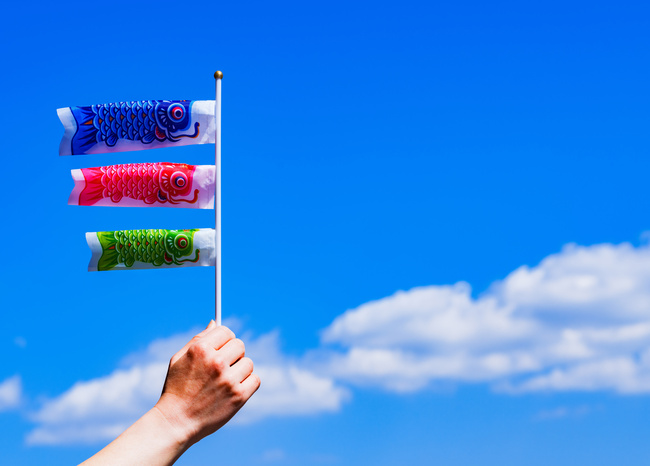
Children’s Day is the most visually distinctive holiday of Golden Week. Colorful koinobori — carp-shaped streamers — fly from poles outside homes and along riverbanks across Japan, symbolizing strength and perseverance (the carp is admired in Japanese culture for swimming upstream). Families display gogatsu ningyo samurai dolls as symbols of courage, and children’s health and happiness take center stage. It is one of the warmest, most universally loved days in the Japanese calendar.
How Japan Celebrates
Golden Week is Japan’s busiest domestic travel period — surpassing even the summer Obon season in sheer volume of movement. Bullet trains (Shinkansen) sell out weeks in advance. Expressways jam. Popular destinations like Kyoto, Nikko, and Okinawa reach capacity. Theme parks and national parks see record daily attendance.
For many Japanese families, Golden Week is the one time of year when everyone — grandparents, parents, and children — can gather together without the pressure of work or school schedules. Multi-generational trips are a defining feature of the holiday, especially to hot spring resorts (onsen ryokan) in the countryside.
Beyond travel, Golden Week has its own quiet rituals: cleaning and airing out the house, planting spring gardens, attending local festivals, and simply walking in parks where the cherry blossoms have given way to fresh green leaves. The shift from the soft pink of late March to the vivid green of early May marks one of Japan’s most beautiful seasonal transitions.
Golden Week 2026 by the Numbers
A Week That Reflects Japan Itself
What makes Golden Week remarkable is how much it compresses into a single week: historical reckoning, constitutional pride, environmental reverence, and the pure joy of children flying carp streamers in the spring breeze. No other holiday period in Japan carries quite the same layered significance.
For anyone seeking to understand Japan — its values, its rhythms, its relationship between duty and rest — Golden Week is an ideal place to begin. It is a country pausing together, collectively, to remember where it has been and to celebrate what it holds dear.