AI-Powered Translation Workflows: Why Humans Deliver the Best of Both Worlds
Quick answer
The most reliable AI-powered translation workflows pair a well-chosen AI engine with professional, subject-matter-expert (SME) post-editors, a practice called machine translation post-editing (MTPE). Human review adds accuracy, cultural nuance, brand consistency, and legal safety that AI cannot guarantee alone. Skipping it risks mistranslations, compliance exposure, brand damage, and lost revenue. To get the most from this model, research and select the right engine for each content type, then keep a human in the loop.
AI-powered translation has never been faster, cheaper, or more capable. As our previous guide to the top AI translation engines showed, today’s neural machine translation (NMT) systems and large language models (LLMs) can localize millions of words in minutes. But speed is only half of the localization equation, and the stakes are high. CSA Research’s “Can’t Read, Won’t Buy” study found that 76% of consumers prefer to buy in their own language and 40% will never purchase from a website in another language, so a single mistranslation can quietly cost real revenue. The organizations that consistently ship accurate, on-brand, and culturally resonant content share one habit: they build AI-powered translation workflows that keep skilled humans in the loop.
This practice, known as machine translation post-editing, or MTPE, is the backbone of effective AI-powered translation workflows: it pairs the raw output of an AI engine with the judgment of professional linguists and subject-matter experts who refine, correct, and validate every translation before it reaches an audience. This guide explains why human post-editing delivers such a strong return, what you risk by skipping it, and how to research and select the right AI engine for your specific company and content.
Rewards of Human Post-Editors in AI-Powered Translation Workflows
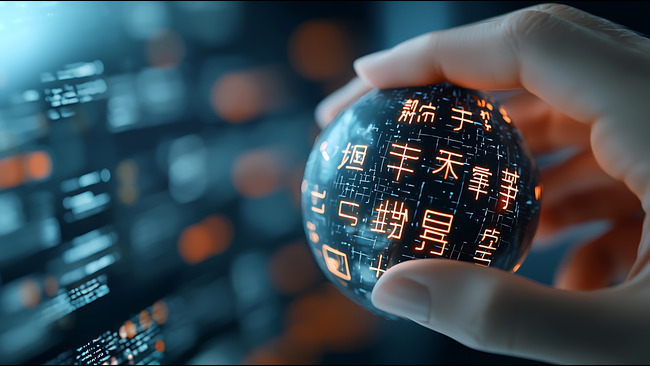 Professional translators who are also subject-matter experts (SMEs) bring context, accountability, and craft that automated systems cannot replicate on their own. Here are the seven biggest rewards of building human post-editing into your AI-powered translation workflows.
- Domain accuracy and correct terminology. AI translates words; a subject-matter expert translates meaning. A linguist who knows medicine, law, finance, or engineering spots when a technical term has been rendered literally instead of correctly and fixes it before it misleads anyone. That is the difference between a sentence that is merely grammatical and one a specialist in the target market will actually trust.
- Cultural and contextual adaptation. Human post-editors localize rather than simply translate, adapting idioms, humor, formality, honorifics, and conventions for dates, currency, and measurement. They also catch phrasing that is technically accurate but awkward, tone-deaf, or unintentionally offensive in the target culture.
- Consistent brand voice. Reviewers apply your style guide, glossary, and translation memory so your brand sounds like itself in every language. AI can drift in tone across a long document; a human keeps messaging, terminology, and personality consistent across markets and content types.
- Legal, regulatory, and compliance safety. Contracts, disclaimers, safety instructions, medical dosing, and financial disclosures leave no room for approximation. SME post-editors understand the regulatory language of the target market and prevent a single mistranslation from creating liability, fines, or real-world harm.
- Detection of hallucinations and silent omissions. LLMs can invent plausible-sounding content or quietly drop a clause in a long passage, errors that automated quality checks often miss. A trained reviewer reads for meaning and catches fabricated facts, flipped negations, and missing sentences before they reach an audience.
- Quality that builds trust and credibility. Polished, natural-sounding translation signals professionalism and respect for the reader. Fluent output earns trust and conversions; clumsy machine output erodes both instantly, no matter how good the underlying product is.
- A feedback loop that improves the AI. Every correction a post-editor makes can feed back into translation memories, glossaries, and adaptive or custom models. Over time the engine produces cleaner first drafts, post-editing effort drops, and your cost per word falls, so human review increasingly pays for itself.
Certified Quality: GPI and the ISO 18587:2017 Standard
GPI has achieved certification under the ISO 18587:2017 standard, which outlines the specific requirements for full, human post-editing of machine translation (MT) output. This international standard ensures that post-edited translations achieve a quality level comparable to human translation performed from scratch. The certification validates GPI’s adaptable quality assurance processes and provides clients with added assurances their AI-powered content undergoes rigorous human review for clarity, tone, and cultural accuracy. This ISO certification focuses on post-editing, and allows the standard to remain flexible for the continual evolution of AI-powered technologies and workflows. Learn how GPI applies this standard on its ISO Certifications & Security page.
Risks of Not Having Human Review
Skipping human review can look like a shortcut, but unedited AI translation often introduces problems that surface at the worst possible moment, in front of customers, regulators, or the public. These are the seven most serious risks of publishing AI-generated translations without professional oversight.
- Mistranslations reaching your audience. Unedited output can contain false friends, flipped negations (“do not” becoming “do”), and subtle errors that change meaning entirely, published straight to customers with no one positioned to catch them.
- Cultural missteps and offense. Machine output can be tone-deaf or violate local taboos, damaging relationships in a market you spent heavily to enter. Such mistakes are frequently invisible to anyone who does not speak the language natively.
- Legal and compliance exposure. An inaccurate contract clause, a mis-stated warning, or a wrong dosage instruction can trigger liability, regulatory penalties, or physical harm. Skipping review to save time is a false economy weighed against that downside.
- Brand and reputation damage. Visibly poor translation makes even an excellent company look careless or inauthentic. Screenshots of embarrassing errors spread quickly, and rebuilding credibility in a market costs far more than editing would have.
- Hallucinated or missing content. Without a human check, fabricated details and silently omitted sentences slip through. Readers may act on information you never wrote, or miss information you meant to convey.
- Inconsistent terminology. The same product, feature, or legal term rendered three different ways across your content confuses users, weakens search visibility, and undermines confidence in your brand.
- Lost revenue, conversions, and search visibility. Poorly localized pages rank lower, convert worse, and push customers toward competitors. The efficiency gains that justified adopting AI translation quietly evaporate when the output costs you sales.
Selecting the Best AI Engine for Your Company’s AI-Powered Translation Workflows
No single engine is best at everything. As our comparison of the top AI translation engines showed, LLMs such as Claude, ChatGPT, and Gemini excel at nuance and tone, while NMT engines such as DeepL, Google Cloud Translation, Azure AI Translator, and Amazon Translate excel at speed, scale, and cost. The right choice depends on your content, your language pairs, your budget, and how well the engine fits a human-in-the-loop workflow. A short, structured evaluation prevents an expensive mismatch.
Translation Approaches Compared at a Glance
Table: How the main translation approaches compare. MTPE pairs a machine first draft with expert human review to capture speed and quality together.
- Map your content and language pairs. Group your content by type, creative and marketing, high-volume support, technical documentation, regulated legal or medical, and list the language pairs that matter most. Different content types reward different engines.
- Research and shortlist candidates. Use current, independent comparisons rather than marketing pages, and remember that model quality and pricing change quickly. Shortlist two or three engines that fit your content profile.
- Pilot with your own content. Public benchmarks on generic text can mislead. Run a representative sample of your real content through each candidate and have subject-matter experts score the output, ideally measuring post-editing effort, how much they actually had to change.
- Evaluate the factors beyond raw quality. Check data privacy and security (does the API use your text to train its models?), compliance and data-residency requirements, integration with your CAT or translation-management tools, support for glossaries and custom models, latency, and true cost at your real volume.
- Confirm human-in-the-loop fit. The best engine for a post-editing workflow exports editable formats, preserves layout, and supports translation memory and glossaries, so your reviewers work quickly instead of fighting the tool.
- Decide, then revisit. Many organizations use more than one engine: an LLM for marketing copy and an NMT engine for support documentation, for example. Re-evaluate periodically, because a better or cheaper option may arrive within months.
How GPI Helps You Choose the Right Engine
GPI can help clients select the best AI translation engine for their company and content. Through a Research Review and Recommendation (RRR) report, GPI evaluates how leading Neural Machine Translation (NMT) and generative AI systems perform on your actual content. It evaluates key criteria such as how well the translation reflects the original meaning, the appropriateness of phrasing and diction, and the accuracy of style and tone. The report also assesses grammar, spelling, and consistency, which are crucial for delivering professional, coherent translations. By analyzing these factors, the report categorizes the post-editing effort required as Heavy, Moderate, or Light, showing you how much refinement each engine’s raw output needs and which engine best fits your content. Request a GPI Research Review & Recommendation to see how each engine performs on your own content.
Conclusion
The future of localization is not AI versus humans, it is AI with humans. The fastest, most cost-effective workflow is one where a well-chosen AI engine produces a strong first draft and professional, subject-matter-expert post-editors refine it into content you can publish with confidence. Invest the time to research and select the right engine for each type of content, build a repeatable post-editing process, and feed corrections back into your tools. Do that, and you capture the best of both worlds: the speed and scale of machine translation, and the accuracy, nuance, and trust that only human expertise can guarantee. Ready to put this into practice? Talk to a GPI localization strategist about building your human-in-the-loop workflow.
Frequently Asked Questions (FAQs)
Q1. What is machine translation post-editing (MTPE)?
MTPE is the process of having professional human linguists review and correct AI- or machine-generated translations. It combines the speed of automated translation with human judgment to reach publication-ready quality.
Q2. Why can’t I rely on AI translation alone?
AI is fast and fluent but can produce subtle mistranslations, cultural missteps, hallucinated content, and silent omissions. In high-stakes contexts, legal, medical, financial, or public-facing marketing, those errors carry real cost, which is why human review remains essential.
Q3. What is a subject-matter expert (SME) translator?
An SME translator is a professional linguist with deep expertise in a specific field, such as law, medicine, engineering, or finance. They ensure specialized terminology and meaning are correct in the target language, not just grammatically valid.
Q4. What is the difference between light and full post-editing?
Light post-editing fixes only critical errors to make text accurate and understandable, useful for internal or low-visibility content. Full post-editing polishes accuracy, style, tone, and consistency to publication quality for customer-facing material.
Q5. Does human review slow the workflow down too much?
Not significantly. Post-editing a solid AI draft is far faster than translating from scratch, and it gets faster over time as translation memories and glossaries grow, letting teams scale quality without scaling cost at the same rate.
Q6. How do I choose the right AI translation engine?
Map your content types and languages, shortlist a few engines, then pilot each with your own content and have SMEs score the results. Weigh quality alongside data privacy, integration, customization, and true cost at your volume, and consider using more than one engine.
Q7. Can human post-editing make the AI better over time?
Yes. Corrections can be fed back into translation memories, glossaries, and adaptive or custom models, so the engine produces cleaner drafts and requires less editing on future projects, improving both quality and ROI.
Q8. Can AI replace human translators?
No. AI produces fast first drafts, but it cannot reliably guarantee accuracy, cultural nuance, legal safety, or brand consistency. Best practice is a human-in-the-loop workflow (MTPE), where subject-matter-expert linguists review and correct AI output before publication.
Q9. What is AI-assisted translation?
AI-assisted translation uses neural machine translation (NMT) or large language models (LLMs) to generate an initial translation that human linguists then post-edit for accuracy, tone, and context, combining machine speed with human judgment.
Q10. What is the difference between AI translation and localization?
AI translation converts text from one language into another. Localization adapts that content, idioms, formatting, currency, imagery, and tone, so it feels native to each market. AI can translate; humans localize.
Q11. When should businesses use human translators?
For any high-stakes or public-facing content, legal, medical, financial, regulated, or brand-critical marketing, where a single error can carry legal, safety, or reputational cost.