Hispanic Heritage Month: What Spanish Localization Really Requires
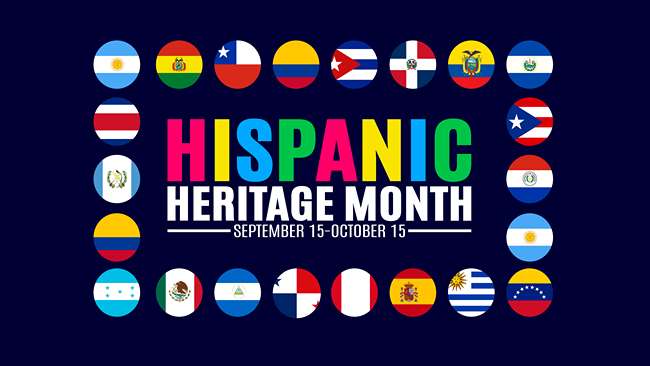 Hispanic Heritage Month runs from September 15 to October 15 and recognizes the histories, cultures, and contributions of Hispanic and Latino communities. For global organizations, it is also a practical prompt to review how well their Spanish content actually serves the people reading it.
The short answer to the question most teams are asking: translating content into Spanish is not the same as reaching Spanish-speaking audiences. Spanish is spoken across more than twenty countries, each with its own vocabulary, register, cultural references, and consumer expectations. Effective Spanish localization adapts terminology, tone, imagery, formats, and examples for a specific audience, rather than producing one generic version and hoping it works everywhere.
Why Does Hispanic Heritage Month Start on September 15?
September 15 marks the anniversary of independence for Costa Rica, El Salvador, Guatemala, Honduras, and Nicaragua. Mexico and Chile celebrate their independence on September 16 and September 18. The observance began in 1968 as Hispanic Heritage Week under President Lyndon B. Johnson and was expanded into a month-long observance in 1988.
That history matters for communicators. The observance was built around a set of distinct national histories, not a single culture. Content that flattens those differences tends to feel generic to the people it is meant to reach.
Why Hispanic Heritage Month Matters to Global Businesses
The U.S. Hispanic population was estimated at 70.1 million as of July 1, 2025, roughly 21 percent of the total population, according to the U.S. Census Bureau. Sixteen states had 1 million or more Hispanic residents, and the median age of the Hispanic population was 31.1, younger than the national median.
Those figures describe scale, but they do not describe a single audience. A third-generation Mexican American professional in Houston, a recent arrival from Venezuela in Miami, and a Puerto Rican family in Orlando may share a heritage category in a data table and very little else in terms of language preference, cultural reference points, or media habits. Many people of Hispanic or Latino heritage are bilingual, and a substantial share are English-dominant. Language choice is a decision about the individual audience, not an assumption you can make from demographics alone.
Translation vs. Localization: What Is the Difference?
Translation converts meaning from a source language into a target language accurately and faithfully.
Localization adapts an entire experience for a specific market or locale. That includes translation, and it also includes terminology choices, tone and formality, currency and measurement units, date and number formats, imagery, legal and regulatory language, payment methods, form fields, name and address structures, and cultural references.
A useful way to think about it: translation asks whether the words are correct. Localization asks whether the experience works for the person using it.
Transcreation sits further along the same spectrum. It re-creates a creative concept for a new market when a direct rendering would lose its persuasive force, which is common with taglines, campaign lines, and wordplay.
How Much Does Spanish Actually Vary?
Enough to change meaning, tone, and trust. A few widely recognized examples:
| Concept | Spain | Mexico | Argentina | Caribbean |
|---|---|---|---|---|
| Car | coche | carro | auto | carro |
| Mobile phone | móvil | celular | celular | celular |
| Computer | ordenador | computadora | computadora | computadora |
| Bus | autobús | camión | colectivo | guagua |
| Juice | zumo | jugo | jugo | jugo |
Grammar varies as well. Spain uses vosotros for informal plural “you,” while Latin America uses ustedes for both formal and informal plural. Argentina, Uruguay, Paraguay, and much of Central America use vos rather than tú, with its own verb forms. Formality conventions differ too: the default register for customer communications in one market can read as stiff or distant in another.
Some words carry very different connotations across regions. Torta means cake in much of the Spanish-speaking world and a sandwich in Mexico. The verb coger is entirely neutral in Spain and carries vulgar connotations in several Latin American countries. These are not obscure edge cases. They appear in everyday product copy, user interfaces, and support content.
Layout is affected as well. Spanish text generally runs longer than English, a standard planning assumption in localization engineering and desktop publishing work. Buttons, navigation labels, table headers, and fixed-width fields need to be designed with that expansion in mind.
Should You Use “Neutral Spanish” or Regional Variants?
Both approaches are legitimate. The right answer depends on content type, risk, and budget.
Neutral or international Spanish avoids strongly region-specific vocabulary and idioms to produce one version that is broadly understandable. It is a reasonable choice for internal documentation, technical manuals, and low-visibility content where efficiency matters more than resonance.
Regional variants adapt to a specific locale such as es-MX, es-ES, es-AR, or es-US. They are the better choice for marketing campaigns, brand voice, user-facing product interfaces, customer support, and anything where trust and conversion are at stake.
A practical way to decide:
- Map your audiences by revenue and risk. Where do your largest or fastest-growing Spanish-speaking audiences sit?
- Segment your content by visibility. Homepage, campaign, and support content justify regional adaptation. Archived technical appendices often do not.
- Start with one or two priority locales. Expanding from a strong base is easier than correcting a generic version that has already shipped.
- Build shared linguistic assets. A glossary, style guide, and translation memory make variant management affordable rather than duplicative.
How Can Brands Communicate Authentically Without Relying on Stereotypes?
Cultural authenticity is a process, not a visual style. A few principles that hold up well:
- Do not treat heritage as a season. Content published only between September 15 and October 15 reads as a campaign rather than a commitment. Audiences notice which brands show up in November.
- Avoid reducing cultures to food, music, and color palettes. Those elements are real, but they are not a substitute for understanding what an audience actually needs from your product or service.
- Do not translate a U.S. campaign and call it localization. If the underlying insight was built for an English-speaking audience, translating it usually produces correct sentences that persuade nobody.
- Involve native speakers from the specific market. A Colombian reviewer is not a substitute for a Mexican reviewer, and neither is a substitute for a bilingual employee with no linguistic training.
- Check imagery, names, and examples as carefully as text. Sample names, addresses, phone formats, and stock photography carry cultural signals of their own.
- Be careful with terminology about identity. “Hispanic,” “Latino,” “Latina,” and “Latinx” are not interchangeable, and preferences vary by community, region, and generation. When identity terms appear in public-facing content, they deserve deliberate review rather than a default setting.
A Practical Spanish Localization Workflow
For teams building or rebuilding a Spanish program, this sequence keeps quality and cost under control:
- Define locales and audience profiles. Document which Spanish variants you support and who each one serves.
- Develop a glossary and style guide per locale. Capture approved terminology, brand terms that stay untranslated, formality rules, and tone guidance.
- Prepare source content for localization. Ambiguous English, idioms, embedded text in graphics, and hard-coded strings all create downstream cost.
- Translate with qualified native linguists. Subject matter expertise matters as much as language pairing for regulated, technical, or financial content.
- Add an editing and review step. A second linguist reviewing the first is the foundation of most recognized quality standards, including ISO 17100.
- Run in-country review with market stakeholders. Give reviewers clear criteria so feedback improves quality rather than introducing personal preference.
- Test in context. Review the translation in the actual layout, interface, or video, not in a spreadsheet.
- Maintain your assets. Update translation memories and glossaries after every project so consistency compounds over time.
Common Mistakes to Avoid
- Using a single Spanish version across all markets by default, without a documented rationale.
- Relying on raw machine translation for customer-facing or regulated content without professional review.
- Treating bilingual employees as an unofficial translation department.
- Localizing the website but leaving support, email, packaging, and legal content in English.
- Translating SEO keywords literally instead of researching how people actually search in each market.
- Leaving imagery, forms, and payment options untouched while translating the words around them.
Key Takeaways
- Hispanic Heritage Month runs September 15 to October 15 and recognizes distinct national histories rather than a single culture.
- Spanish localization requires regional and cultural adaptation, not only accurate translation.
- Vocabulary, grammar, register, and connotation vary significantly across Spanish-speaking markets.
- Neutral Spanish and regional variants are both valid choices, and the decision should be driven by content visibility and business risk.
- Glossaries, style guides, translation memories, and in-country review make multi-variant Spanish sustainable.
- Authentic communication is year-round work, not a seasonal campaign.
Frequently Asked Questions
1- What is the difference between translation and localization?
Translation converts text accurately from one language into another. Localization adapts the full experience for a specific market, including terminology, tone, formats, imagery, payment options, and cultural references. Most customer-facing content needs localization rather than translation alone.
2- Is there one universal Spanish that works everywhere?
There is no single Spanish that works equally well everywhere. Neutral or international Spanish reduces region-specific vocabulary to create one broadly understandable version, and it is a reasonable choice for technical or internal content. For marketing, product interfaces, and customer support, regional variants generally perform better because they match how the audience actually speaks.
3- Which Spanish variant should a U.S. company use first?
That depends on where your customers are. Many U.S.-focused organizations begin with a U.S. Spanish variant informed by the largest communities they serve, while companies expanding into Latin America often prioritize Mexican Spanish because of market size. The decision should follow your revenue concentration and growth plans rather than a default setting.
4- Do all Hispanic and Latino audiences prefer Spanish-language content?
No. Many people of Hispanic or Latino heritage are bilingual, and a significant share are English dominant. Language preference varies by generation, country of origin, region, and context. Offering a choice, and making that choice easy to find, is usually more effective than assuming a preference.
5- How do we keep multiple Spanish variants consistent without multiplying cost?
Shared linguistic assets do most of the work. A central glossary, locale-specific style guides, translation memory, and a documented review process let teams adapt content efficiently rather than starting from scratch for each market.
6- Is machine translation acceptable for Spanish content?
It depends on the content and the risk. Machine translation with professional post-editing can be appropriate for high-volume, low-risk material such as internal documentation or knowledge base articles. Marketing, legal, medical, financial, and safety-related content requires qualified human linguists and a formal review step.
7- How should we approach Hispanic Heritage Month content specifically?
Focus on substance rather than decoration. Audit whether your Spanish-language content is genuinely useful and current, highlight work your organization does year-round, and avoid reducing diverse communities to a single set of cultural symbols.
Ready to Strengthen Your Spanish Content?
Hispanic Heritage Month is a natural checkpoint for reviewing how your organization communicates in Spanish. If your Spanish content has grown organically across websites, campaigns, product interfaces, and support channels, a structured review often surfaces inconsistencies that are easy to fix and expensive to ignore.
Globalization Partners International works with organizations on Spanish translation and localization across documents, websites, software, multimedia, and digital marketing, supported by glossaries, style guides, and translation memory tools that keep terminology consistent across markets. If you are planning Spanish content for the year ahead, our team can help you scope the right approach for each audience.