European Day of Languages: Building a Localization Strategy That Fits the Continent
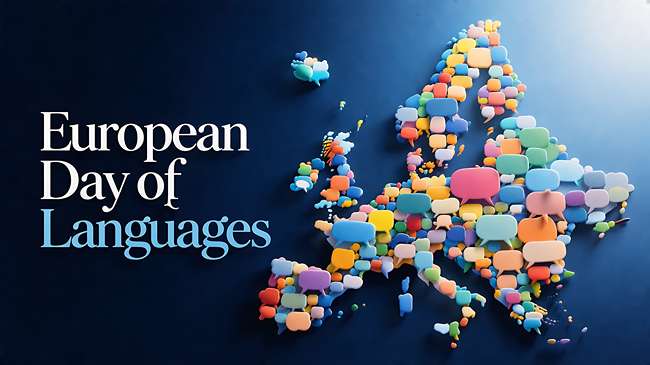 The European Day of Languages is observed on September 26. It exists to promote language learning and to draw attention to a fact that companies expanding into Europe frequently underestimate: the continent is not one market with one working language.
For organizations planning European growth, the practical question is how to decide which languages to support, to what depth, and with what operational model. A European localization strategy answers those questions deliberately, using audience data, regulatory requirements, and content risk, rather than defaulting to English plus whichever markets shouted loudest.
What Is the European Day of Languages?
The European Day of Languages was launched in 2001 during the European Year of Languages and is organized jointly by the Council of Europe and the European Commission. It has been marked annually on September 26 ever since, through decentralized events organized by schools, cultural institutes, ministries, and community organizations.
Its purpose is straightforward: raise awareness of Europe’s linguistic diversity, encourage language learning at any age, and support intercultural understanding.
How Linguistically Diverse Is Europe?
The numbers commonly cited by the Council of Europe and the European Commission tell the story. The European Union has 24 official languages. Across the continent, more than 200 languages are spoken, including roughly 225 indigenous languages. Beyond the official languages, Europe is home to around 60 regional and minority languages, along with many languages brought by migrant communities.
Those categories are not interchangeable, and mixing them up causes real problems in planning documents.
- Official or national languages have formal status at state level and, in the EU context, at Union level. All 24 EU official languages carry legal status, which affects how legislation and certain communications are published.
- Co-official or regional official languages have formal status within a territory rather than the whole state. Catalan, Basque, and Galician in their respective Spanish autonomous communities, and Welsh in Wales, are examples. These are not informal local variants. They can carry legal, public-sector, and consumer-facing obligations.
- Minority languages are historically spoken by groups forming a numerical minority within a state. The Council of Europe’s European Charter for Regional or Minority Languages, opened for signature in 1992, provides the main European framework for their protection.
- Dialects are varieties of a language rather than separate languages, though the boundary is often contested and politically sensitive. The distinction between a language and a dialect is rarely purely linguistic, and it is wise to follow the terminology used by the community and the relevant national authority rather than making a call yourself.
Which Languages Should a Company Prioritize in Europe?
There is no universal list. There is, however, a workable method. Most organizations arrive at a defensible answer by scoring each candidate language against four factors:
- Revenue and pipeline. Where do current customers, leads, and sales activity already sit?
- Regulatory necessity. Does selling a product or delivering a service in a market require documentation in that country’s official language?
- Competitive reality. Do local competitors already serve the market in the local language? English-only content is a weak position against a local-language incumbent.
- Operational cost and content volume. How much content actually needs to move, and how often does it change?
That scoring usually produces tiers rather than a flat list:
| Tier | What it typically includes | Typical workflow |
|---|---|---|
| Tier 1: strategic markets | Website, product interface, campaigns, support, legal, packaging | Human translation with revision, in-country review, transcreation for campaigns |
| Tier 2: growth markets | Core website, key product content, priority support articles | Human translation with revision, selective review |
| Tier 3: coverage markets | Knowledge base, secondary documentation, internal material | Machine translation with professional post-editing, spot review |
| Tier 4: monitor only | Nothing translated yet | Track demand signals before investing |
The value of tiering is that it makes the trade-offs visible. Teams stop arguing about whether to “do” a language and start deciding what depth that language justifies this year.
Why English-Only Rarely Works in Europe
English proficiency across Europe is high in some countries and modest in others, and proficiency is not the same as preference. Research from CSA Research, based on a survey of 8,709 consumers in 29 countries published in 2020, found that 76 percent of online shoppers prefer to buy products with information in their own language and 40 percent said they would never buy from websites in other languages.
The practical reading of that finding is not that English is useless. It is that English-only content quietly caps your addressable market, and the cap is invisible in your analytics because the people who leave never identify themselves.
What Language Obligations Apply in the EU?
Language requirements in the European Union arise from several directions rather than one rule. The general pattern is that consumer-facing information, safety information, and product instructions must be available in the official language or languages of the member state where the product or service is made available, with the specific language determined by that member state.
Sector-specific rules add further requirements. Medical devices, in vitro diagnostics, machinery, chemicals, food labeling, and financial services each have their own information and labeling expectations, and several require documentation in the national language regardless of how well the audience reads English.
These requirements evolve, and member states implement them differently. Confirm the current obligations for your product category and target markets with qualified regulatory advisors before finalizing a language plan.
What Localization Adds Beyond Translation in Europe
Two markets that share a language are not the same market. German content for Germany, Austria, and Switzerland differs in vocabulary, formality conventions, currency, legal references, and in the Swiss case, orthography. French for France and French for Belgium diverge in terminology and institutional references. Portuguese for Portugal is not Portuguese for Brazil. For a closer look at these pitfalls, see our overview of multilingual website localization challenges in EU markets.
This is why locale codes matter operationally. Managing content as de-DE, de-AT, and de-CH rather than as “German” gives teams somewhere to put those differences.
Beyond language variants, European localization commonly involves:
- Formality and address. German Sie and du, French vous and tu, and equivalent choices elsewhere define brand voice and need a documented rule per market.
- Decimal commas, date order, 24-hour time, metric units, and paper sizes.
- Forms and data fields. Address structures, postal code formats, name conventions, VAT identifiers, and phone number patterns.
- Payment and checkout. Preferred payment methods differ substantially across European markets.
- Legal and privacy content. Cookie consent, terms, and privacy notices need accurate, jurisdiction-aware language rather than generic translation.
- Text expansion. German and Finnish commonly run longer than English, which affects interface layout, navigation labels, and print design.
- Search behavior. Keyword research must be conducted in the target language. Translating an English keyword list produces terms nobody searches for.
How to Manage Multilingual Content at Scale
The difference between a European program that stays consistent and one that fragments is almost always operational rather than linguistic.
- Centralize terminology. A maintained glossary per language, with approved and forbidden terms, prevents the same product feature from acquiring four names.
- Maintain translation memories. Using translation memory tools to reuse previously approved translations improves consistency and reduces cost on repetitive and updated content.
- Write style guides per locale. Cover tone, formality, capitalization, formats, and handling of brand terms.
- Connect your systems. Integrating your content management system, product information system, or knowledge base with your translation workflow through translation connectors removes the copy-and-paste step where most errors and delays originate.
- Formalize in-country review. Give reviewers deadlines, criteria, and a structured way to submit feedback, so review improves accuracy rather than becoming an open-ended preference exercise.
- Separate content by update frequency. Content that changes weekly needs a different workflow from content that changes annually.
- Measure quality consistently. Use a defined error typology so quality discussions rest on evidence rather than impressions.
What About Employees?
Multilingual communication is not only a customer-facing matter. Organizations with distributed European workforces face the same decisions internally: which languages safety training, HR policies, compliance courses, and leadership communications appear in.
The reasoning is similar to the customer case. Comprehension of safety and compliance content should not depend on an employee’s second-language reading ability. Where employment terms, workplace safety, or regulated conduct are involved, local-language delivery is a matter of both effectiveness and duty of care.
Common Mistakes to Avoid
- Treating Europe as one market with English as the default working language.
- Selecting languages based on internal enthusiasm rather than revenue, regulation, and competition.
- Managing content as “German” or “French” instead of by locale.
- Translating keyword lists instead of researching search behavior per market.
- Ignoring regional and co-official languages where they carry legal or commercial weight.
- Launching localized sites without localized customer support behind them.
- Allowing each regional team to commission its own translations with no shared terminology.
Key Takeaways from the European Day of Languages
- The European Day of Languages is observed on September 26 and is organized jointly by the Council of Europe and the European Commission.
- The EU has 24 official languages, and Europe overall has more than 200 languages, including around 60 regional and minority languages.
- Official, co-official, minority, and dialect are distinct categories with different legal and commercial implications.
- Language selection should follow revenue, regulation, competition, and content volume, expressed as tiers rather than a flat list.
- Shared languages are not shared markets, which is why locale-level management matters.
- Terminology, translation memory, style guides, system integration, and structured review are what keep a multilingual program consistent at scale.
European Day of Languages: Frequently Asked Questions
When is the European Day of Languages celebrated?
The European Day of Languages is celebrated every year on September 26. The Council of Europe launched it in 2001, at the close of the European Year of Languages, and it has been organized jointly with the European Commission ever since.
What is the purpose of the European Day of Languages?
The European Day of Languages promotes Europe’s linguistic diversity, encourages people of all ages to learn more languages, and supports intercultural understanding. For businesses, it is a timely reminder that Europe is a multilingual market that rewards content in local languages.
Who organizes the European Day of Languages?
The Council of Europe and the European Commission organize the day jointly. The European Centre for Modern Languages of the Council of Europe, based in Graz, Austria, coordinates the official website and resources, while schools, cultural institutes, and community groups run local events.
How many official languages does the European Union have?
The EU has 24 official languages. Across Europe as a whole, more than 200 languages are spoken, including roughly 60 regional and minority languages and many languages used by migrant communities.
What is the difference between a regional language and a dialect?
A regional or minority language is a distinct language historically spoken by a community within a state, and it may hold formal status in a territory. A dialect is a variety of a language rather than a separate language. The boundary is often contested and carries political weight, so follow the terminology used by the relevant community and national authority.
Which languages should businesses localize into first for Europe?
Score candidate languages against current revenue and pipeline, regulatory necessity, competitive presence, and content volume, then assign tiers that define how much content each language receives. This produces a defensible plan rather than a list based on internal preference.
Is English enough for B2B audiences in Europe?
Sometimes for early-stage awareness, rarely for the full journey. Research from CSA Research found that 76 percent of online shoppers prefer information in their own language and 40 percent would not buy from websites in other languages. Procurement, legal review, and support interactions in particular tend to move into local language.
Do Germany, Austria, and Switzerland need separate German content?
Often yes, at least partially. These markets share a language but differ in vocabulary, legal references, currency, and, in Switzerland, orthography. Many organizations maintain a core German version and locale-specific adaptations for the elements that differ.
How can companies keep terminology consistent across European languages?
Maintain a central glossary per language, use translation memory, document style guides by locale, and route all content through a single managed workflow. Consistency problems almost always trace back to parallel uncoordinated requests rather than to individual translators.
How can businesses mark the European Day of Languages?
Use it as a checkpoint for your European localization strategy. Review which languages your website, product, and support channels cover, check glossaries and style guides for gaps, and plan the next markets to add based on revenue, regulation, and customer demand.