International Translation Day 2026: Where AI Helps and Where Human Expertise Decides
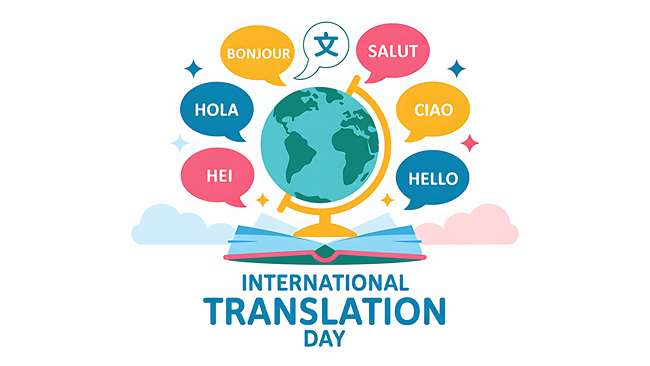 International Translation Day 2026 falls on September 30. It honors the language professionals whose work makes cross-border communication possible, and it arrives this year in the middle of the most significant technological shift the profession has experienced.
The question organizations keep asking has a clear answer, and it is not the one the debate usually offers. The useful distinction is not between AI translation and human translation. It is between content where a mistake is inconvenient and content where a mistake is expensive, dangerous, or irreversible. Get that distinction right, and the workflow decision follows naturally.
What Is International Translation Day?
International Translation Day takes place on September 30, the feast day of Saint Jerome, who translated much of the Bible into Latin and is regarded as the patron saint of translators.
The International Federation of Translators (FIT) has promoted the observance since its founding in 1953 and formally established it in 1991. On May 24, 2017, the United Nations General Assembly adopted resolution 71/288, recognizing the role of professional translation in connecting nations and fostering peace, understanding, and development, and declaring September 30 as International Translation Day.
The FIT theme for International Translation Day 2026 is “Linguistic Diversity and Language Rights,” with the subtitle “the power of being understood.” The theme places translation, interpreting, and terminology at the center of linguistic inclusion, and it explicitly connects the profession to questions of access, equity, and participation.
That framing is worth pausing on. After all, language rights are not abstract. They determine whether a patient understands a diagnosis, whether a worker understands a safety procedure, whether a citizen can participate in a legal process, and whether a customer understands what they are agreeing to. In other words, translation is how those rights become operational.
What Do Professional Linguists Actually Do?
The word “translator” flattens a set of distinct professional roles, and understanding them is the first step toward making sensible technology decisions.
| Role | What the work involves |
|---|---|
| Translator | Renders meaning from a source language into a target language, applying subject matter knowledge and target-audience judgment |
| Reviser or editor | Compares translation against source for accuracy, terminology, and style, a required step under ISO 17100 |
| Proofreader | Checks the final target text for errors in language, formatting, and presentation |
| Terminologist | Builds and maintains approved terminology so the same concept is expressed consistently across content and languages |
| Interpreter | Works with spoken or signed language in real time, in consecutive, simultaneous, or remote settings |
| Post-editor | Edits machine translation output to a defined quality level, a specialization addressed by ISO 18587 |
| Transcreator or copywriter | Re-creates creative and persuasive content so it works in the target market |
| Localization engineer | Handles file formats, code, tagging, layout, and integration so translated content functions correctly |
| Quality manager | Applies error typologies and sampling to measure quality objectively rather than by impression |
None of these roles is defined by typing words in a second language. Instead, judgment defines them: about audience, purpose, risk, register, and the consequences of getting it wrong.
Where Does AI Translation Genuinely Help?
Neural machine translation and large language models have made real gains, and dismissing them is as unhelpful as overselling them. In particular, the clearest productivity benefits appear in these areas:
- High-volume, repetitive content. Support articles, product catalogs, internal documentation, and archives where the alternative is not translating the content at all.
- First-draft generation. For content that will go through professional editing, machine output can compress turnaround significantly, particularly for language pairs with strong training data.
- Gisting and triage. Helping support teams understand inbound messages quickly, or helping reviewers identify which documents in a large set are relevant.
- Terminology and consistency checks. Automated checks that confirm linguists used approved terms, that numbers match the source, and that formatting is intact.
- Translation memory and content matching. Retrieving previously approved translations so linguists focus on what is genuinely new.
- Subtitling support. Timing, segmentation, and transcription assistance that reduce manual production work.
In short, the common thread is that AI is strongest where the task is high-volume, pattern-driven, and reversible, and where a human remains accountable for the published result.
Where Does Human Expertise Remain Essential?
Machine translation operates on text. By contrast, professional linguists operate on meaning in context, and the gap between those two things is where most serious errors live.
Context and ambiguity. Source content is frequently ambiguous, and the resolution depends on information that is nowhere in the sentence. Is “charge” a fee, an accusation, an electrical action, or a command? A linguist asks. A machine, however, guesses confidently.
Culture. Humor, idiom, metaphor, politeness conventions, and imagery all carry meaning that does not survive literal rendering. A campaign line that works in one market can be flat, confusing, or offensive in another.
Terminology governance. Consistent terminology is a decision, not an output. Someone has to determine which term is approved, which is prohibited, and which product names never get translated, and then maintain that over years and releases.
Brand voice. Voice is a sustained set of choices about register, rhythm, and vocabulary. However, machine output tends toward the statistically average phrasing, which is precisely the opposite of a distinctive brand.
High-stakes content. Medical information, pharmaceutical documentation, legal agreements, financial disclosures, safety instructions, and regulatory submissions all carry consequences that make unreviewed automation indefensible.
Accountability. When a translation causes harm, someone has to be answerable for it. Professional practice, certification, contractual obligation, and documented review processes provide that accountability. A model output, on the other hand, does not.
Low-resource languages. Machine translation quality varies enormously by language pair. For many of the world’s languages, including many with substantial speaker populations, output quality remains well below what published content requires, which is directly relevant to the linguistic diversity theme of this year’s observance.
A Practical Framework: Match Workflow to Content Risk
The most reliable way to make these decisions is to classify content by consequence rather than by department or format.
| Risk level | Content examples | Recommended workflow |
|---|---|---|
| Critical | Medical and pharmaceutical content, safety instructions, legal agreements, regulatory submissions, financial disclosures | Qualified subject matter linguists, independent revision, in-country review, full quality assurance record |
| High | Website and product interface, contractual terms, technical documentation, training and certification | Professional translation with revision, terminology control, contextual testing |
| Elevated | Marketing campaigns, brand content, taglines, video and audio | Transcreation or specialist copywriting with market review |
| Moderate | Knowledge base, help center, product catalogs | Machine translation with professional post-editing to a defined quality level |
| Low | Internal documentation, archived material, inbound message triage | Machine translation, human review on request |
Two rules make this framework work in practice. First, content owners and the localization team own the classification jointly, rather than leaving it to whoever files the request. Second, the default for anything unclassified is the higher tier, not the lower one.
What Standards and Safeguards Apply?
Several recognized reference points help organizations assess whether a workflow is defensible.
- ISO 17100:2015 specifies requirements for translation services, including translator competence and the requirement that a second qualified person revise the translation. Globalization Partners International is ISO 17100:2015 certified for translation services.
- ISO 18587:2017 addresses full post-editing of machine translation output, defining the process and the competences post-editors require. It exists because combining automation with human work needs a defined process rather than improvisation.
- Error typology frameworks such as MQM and related quality models allow teams to categorize and count errors by type and severity, which turns quality discussions into evidence rather than opinion.
- Data security is an underdiscussed risk. Pasting confidential source content into a public AI tool may breach client agreements, privacy obligations, or regulatory requirements. Organizations handling sensitive content need clear policies on which tools may process which data, and where those tools store it.
Standards and regulatory expectations evolve, particularly around AI governance. Confirm current requirements applicable to your sector and markets.
How to Get the Most From Both
For teams building a program that uses technology well without exposing the organization:
- Classify your content by risk before choosing tools. Making technology decisions before content decisions produces expensive rework.
- Invest in terminology first. Glossaries and translation memories improve both human and machine output, and they are the most reusable asset you will build.
- Define quality levels explicitly. “Good enough for internal reference” and “publishable” are different targets, and post-editors need to know which one applies.
- Keep humans accountable for published output. Of course, machine assistance is fine. Unreviewed machine publication in consequential content is not.
- Give linguists context. Screenshots, reference material, product access, and a route to ask questions improve quality more than almost any tool.
- Track error types, review cycles, and post-editing effort so decisions rest on your own data rather than vendor claims.
- Set a clear AI usage policy. Specify which systems may process which content types, and communicate it to internal teams and partners.
Why International Translation Day 2026 Matters Beyond Efficiency
The International Translation Day 2026 theme is a useful corrective to a conversation that has become narrowly focused on cost per word. Ultimately, translation is what allows people to participate in systems that were not built in their language: healthcare, employment, education, commerce, and civic life.
Automation genuinely expands the amount of content that can be made available in more languages, which is a real gain for access. It also concentrates quality in languages with abundant training data, which risks widening the gap for everyone else. Both things are true at once, and organizations serious about reaching global audiences should plan for both.
The professionals we recognize on September 30 are the people who hold that line: who ask what a sentence actually means, who know which term the regulator expects, and who take responsibility for the result.
Key Takeaways From International Translation Day 2026
- International Translation Day falls on September 30; FIT formally established it in 1991, and the UN General Assembly recognized it in resolution 71/288 on May 24, 2017.
- The FIT theme for 2026 is “Linguistic Diversity and Language Rights: the power of being understood.”
- AI translation delivers real productivity gains in high-volume, pattern-driven, reversible content.
- Human expertise remains decisive for context, culture, terminology governance, brand voice, high-stakes content, and accountability.
- Classify content by consequence, then match the workflow to the risk tier.
- ISO 17100 and ISO 18587 provide recognized reference points for translation and post-editing processes.
- Terminology assets and clear data policies improve both human and automated output.
Frequently Asked Questions
1- When is International Translation Day and why September 30?
It takes place annually on September 30, the feast day of Saint Jerome, who translated much of the Bible into Latin and is considered the patron saint of translators. The International Federation of Translators formally established the day in 1991, and the UN General Assembly recognized it in resolution 71/288, adopted on May 24, 2017.
2- What is the International Translation Day 2026 theme?
The International Federation of Translators has set the 2026 theme as “Linguistic Diversity and Language Rights,” subtitled “the power of being understood,” focusing on the role of translation, interpreting, and terminology in linguistic inclusion.
3- Will AI replace human translators?
The evidence so far points to changing roles rather than replacement. Machine translation handles high-volume, lower-risk content effectively, while professional linguists concentrate on judgment-intensive work: context resolution, cultural adaptation, terminology governance, high-stakes content, and accountability for published output. Post-editing has become a distinct specialization with its own international standard.
4- What is machine translation post-editing?
Post-editing is the process in which a qualified linguist edits machine translation output to reach a defined quality level. ISO 18587:2017 specifies the process for full post-editing and the competences post-editors need. It is a professional discipline rather than a quick proofread.
5- Which content should never rely on unreviewed machine translation?
Medical and pharmaceutical content, safety and emergency instructions, legal agreements, regulatory submissions, financial disclosures, and anything where a misunderstanding could cause harm, legal exposure, or a decision the reader cannot reverse. Brand and campaign content also requires human work, for different reasons.
6- What is the difference between translation, localization, and transcreation?
Translation renders meaning accurately from one language into another. Localization adapts an entire experience for a market, including formats, imagery, terminology, and cultural references. Transcreation re-creates creative content so it achieves the same effect in the target market, which often means departing substantially from the source wording.
7- Is it safe to use public AI tools for confidential content?
Not without a policy. Confidential, personal, or regulated content processed through public tools may breach client agreements, privacy obligations, or sector regulations. Organizations should define which systems may handle which categories of data, and verify how that data is retained and used.
8- What should we look for in a language services partner?
Documented quality processes including independent revision, relevant certifications such as ISO 17100, subject matter expertise in your sector, terminology and translation memory management, transparency about where and how automation is used, and clear data security practices.
Marking International Translation Day 2026 in Your Organization
International Translation Day is a good moment to look at how language work actually happens inside your organization: which content goes through a documented process, which goes through an informal one, and which is being published in languages nobody on the team can read.
Globalization Partners International provides professional translation, localization, interpretation, and multilingual content services, combining human linguistic expertise with translation technology, and is ISO 17100:2015 certified for translation services. If you are reassessing how AI fits into your language workflows, our team can help you map content risk tiers and define where automation belongs and where it does not.
Sources
- United Nations, “International Translation Day”
- International Federation of Translators, “International Translation Day 2026”
- International Federation of Translators, events and theme announcements
- ISO 17100:2015, Translation services: Requirements for translation services
- ISO 18587:2017, Translation services: Post-editing of machine translation output
- Globalization Partners International, ISO certifications and security