International Day of the World’s Indigenous Peoples: Why Language Preservation Matters More Than Ever
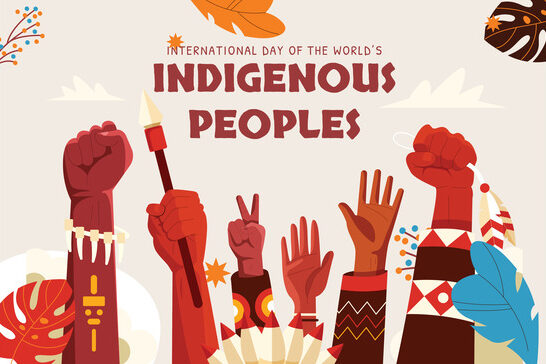 Every 9 August, the world pauses to recognize the cultures, rights, knowledge systems, and languages of Indigenous Peoples. It is a day of celebration, but also a reminder: the languages that carry thousands of years of ecological knowledge, oral history, law, medicinal practices, and cultural identity are disappearing at a faster rate than ever before.
For organizations that communicate across borders (global businesses, NGOs, government agencies, healthcare providers, and educational institutions), the International Day of the World’s Indigenous Peoples is more than a date on a CSR calendar.
It is an invitation to think carefully about how language shapes access, dignity, and inclusion, and about what genuine multilingual communication requires.
What Is the International Day of the World’s Indigenous Peoples?
The International Day of the World’s Indigenous Peoples is a United Nations observance held every 9th of August to raise awareness of the rights, cultures, and needs of Indigenous Peoples worldwide. It was established by UN General Assembly resolution 49/214 in December 1994 and marks the first meeting of the UN Working Group on Indigenous Populations, held in Geneva in 1982.
The observance grew out of decades of advocacy by Indigenous representatives seeking recognition at the international level. According to the United Nations, the date was chosen deliberately: 9 August 1982 marked the first meeting of the UN Working Group on Indigenous Populations, established under the Sub-Commission on the Promotion and Protection of Human Rights. The 2026 theme is “Honoring Indigenous Midwives: Safeguarding Life and Well-being,” highlighting Indigenous knowledge systems in health and care, as well as the structural barriers that limit access to culturally appropriate healthcare. The UN commemoration event is scheduled for 10 August 2026, from 8:30 to 10:30 a.m. EDT, and will be held online.
Summary box
- What: UN international observance
- When: 9 August, annually
- Established: UN General Assembly resolution 49/214 (23 December 1994)
- Why that date: First meeting of the UN Working Group on Indigenous Populations, Geneva, 1982
- 2026 theme: Honoring Indigenous Midwives: Safeguarding Life and Well-being
Why Is It Celebrated Every Year?
The day is observed annually because Indigenous Peoples continue to face disproportionate poverty, discrimination, land dispossession, and cultural and linguistic loss. An annual observance keeps these issues on the international agenda, mobilizes governments and institutions, and celebrates the contributions Indigenous communities make to humanity’s cultural and ecological heritage.
The United Nations reports that Indigenous Peoples make up less than 6% of the global population but account for at least 15% of the world’s poorest. That gap has persisted for decades, which is precisely why sustained, ongoing attention matters more than one-off gestures.
The observance is also a celebration of Indigenous Peoples’ enduring contributions. According to the United Nations, Indigenous territories encompass around 28% of the Earth’s surface and contain roughly 11% of the world’s forests. Indigenous communities are also widely recognized as guardians of much of the world’s remaining biodiversity. The day is an opportunity to acknowledge that stewardship and the languages that preserve and transmit this knowledge across generations.
Who Are Indigenous Peoples?
Indigenous Peoples are distinct social and cultural groups who share ancestral ties to the lands and natural resources where they live. The United Nations estimates there are approximately 476 million Indigenous people across some 90 countries, representing about 5,000 distinct cultures and speaking a majority of the world’s estimated 7,000 languages.
The UN has deliberately avoided adopting a single universal definition, favoring self-identification as a fundamental criterion. In practice, Indigenous Peoples are generally understood to have retained social, cultural, economic, and political characteristics distinct from the dominant societies around them, alongside historical continuity with pre-colonial or pre-settler societies.
The International Labour Organization’s Indigenous and Tribal Peoples Convention, 1989 (No. 169) is the only international treaty open for ratification that deals specifically and comprehensively with Indigenous and tribal peoples’ rights. It sets out objective criteria alongside self-identification. Adopted in 1989, it has been ratified by only about two dozen countries, meaning most Indigenous communities still live in countries that have not ratified it.
Why Indigenous Languages Are Disappearing
Indigenous languages are disappearing because of historical assimilation policies, displacement from ancestral lands, economic pressure to adopt dominant languages, and exclusion from schools, media, government, and digital spaces. UNESCO notes Indigenous languages are especially vulnerable because many are not taught in schools or used in public life.
The drivers are layered and mutually reinforcing:
- Historical assimilation policies. Residential and boarding school systems in several countries explicitly punished children for speaking their mother tongue, breaking transmission between generations.
- Displacement and migration. When communities are separated from ancestral lands, the contexts in which a language lives, such as ceremony, land management, and seasonal work, are disrupted.
- Economic and educational pressure. Where schooling, employment, and public services operate exclusively in a dominant language, families face real incentives to shift away from their heritage language.
- Absence from public and digital life. Languages with no presence in media, government services, software interfaces, or online content become invisible to younger speakers.
- Structural discrimination. UNESCO links language loss directly to the marginalization of speakers themselves, not only to abstract linguistic trends.
Estimates of the scale vary by methodology and source, and reputable organizations report different figures. UNESCO has stated that at least 40% of the roughly 7,000 languages used worldwide are at some level of endangerment; UNESCO’s World Atlas of Languages documents 8,324 languages spoken or signed globally, with around 40% considered at risk. The United Nations has also cited an estimate that one language disappears every two weeks. These numbers differ because counting languages and defining endangerment both involve genuine scholarly debate. The direction of travel, however, is not in dispute.
Why Indigenous Languages Matter
Indigenous languages carry knowledge that exists nowhere else: ecological classifications, medicinal practices, oral histories, legal traditions, and worldviews. When a language falls out of use, that knowledge often becomes inaccessible. Language is also central to identity, community cohesion, health outcomes, and the exercise of legally recognized rights.
Consider what is encoded in a language spoken by a few hundred people: names and behaviors for plant and animal species that may not appear in scientific literature, seasonal indicators refined over centuries, and navigational or agricultural techniques adapted to a specific ecosystem. UNESCO has emphasized that when linguistic knowledge about local ecosystems and traditional practices becomes inaccessible, the survival of those practices is itself threatened.
There is also a rights dimension. Free, prior, and informed consent, access to justice, healthcare, and education all depend on people being able to understand and be understood. Language access is not a courtesy. It is often the practical precondition for a right to be exercised at all.
UNESCO’s Role in Protecting Indigenous Languages
UNESCO is the lead United Nations agency for the International Decade of Indigenous Languages (2022–2032), proclaimed by UN General Assembly resolution A/RES/74/135. UNESCO coordinates the Decade’s Global Action Plan, maintains the World Atlas of Languages, and supports member states, Indigenous organizations, and other stakeholders in language documentation, education, and digital inclusion.
The Decade builds on the 2019 International Year of Indigenous Languages, which UNESCO also led. Its Global Action Plan spans ten interlinked thematic areas, addressing domains such as inclusive education in Indigenous languages, digital empowerment, cultural heritage, and the use of Indigenous languages in public administration and justice. UNESCO works in cooperation with the UN Department of Economic and Social Affairs (UN DESA) and a Global Task Force that includes Indigenous representatives.
A defining principle of the Decade is that Indigenous Peoples are the custodians of their own languages. The UN resolution invites Indigenous Peoples to develop their own implementation measures, and calls on states to establish national mechanisms with adequate funding, in partnership with Indigenous communities.
The United Nations’ Efforts to Support Indigenous Peoples
Beyond the annual observance, the United Nations supports Indigenous Peoples through the UN Declaration on the Rights of Indigenous Peoples (2007), the Permanent Forum on Indigenous Issues, a UN System-Wide Action Plan adopted in 2015, and successive International Decades focused on Indigenous rights and languages.
Key milestones include:
- 1993: International Year of the World’s Indigenous Peoples
- 1995–2004 and 2005–2014: First and Second International Decades of the World’s Indigenous People
- 2007: Adoption of the UN Declaration on the Rights of Indigenous Peoples (UNDRIP) on 13 September. UN records cite an overwhelming majority in favour (sources report 143 or 144 votes), four states against (Australia, Canada, New Zealand, and the United States), and 11 abstentions. All four states that voted against have since reversed their positions.
- 2015: UN System-Wide Action Plan on the rights of Indigenous Peoples, developed following the 2014 World Conference on Indigenous Peoples
- 2022–2032: International Decade of Indigenous Languages
UNDRIP is not legally binding, but it establishes a universal framework of minimum standards, including explicit rights relating to language, education, culture, and media.
How Translation Supports Indigenous Language Preservation
Translation helps preserve Indigenous languages by making information available in community languages, documenting oral traditions, expanding where a language is used, and enabling Indigenous communities to access services, legal processes, and education without giving up their mother tongue. Preservation is not only about archiving. A language survives when it is used: in classrooms, clinics, courtrooms, government notices, workplace safety materials, and increasingly in apps and online content. Translation and interpretation extend a language into those domains.
In practice, this work takes several forms:
- Public health and safety materials translated and adapted for community comprehension, not just linguistic equivalence
- Legal and consultation documents translated so that consent processes are meaningful
- Educational resources developed in Indigenous languages to support bilingual instruction
- Oral history documentation transcribed, translated, and archived with community consent
- Community interpreting in healthcare, social services, and justice settings
Crucially, this work should be led by or conducted in close partnership with Indigenous speakers and community organizations. External linguists and language service providers can offer methodology, terminology management, quality assurance, and technology, but the authority over the language belongs to its speakers.
Why Localization Builds Cultural Respect
Localization adapts content to the language, culture, conventions, and expectations of a specific audience, going beyond translation to address imagery, symbolism, color, format, tone, examples, and cultural references. Done well, localization shows respect by communicating that an organization values its audience’s culture and context.
Where translation asks “what does this say?”, localization asks “what will this mean, here, to these people?” A safety notice that uses an unfamiliar visual metaphor, a health campaign that ignores community protocols around who may discuss a topic, or a consultation document written at an inaccessible reading level all fail even when every word is technically translated correctly.
Cultural adaptation is the discipline of adjusting messaging, visuals, and structure so that content is appropriate and effective in a specific cultural setting, while preserving accuracy and intent. For organizations engaging Indigenous communities, cultural adaptation frequently means slowing down, consulting early, and accepting that the right approach may differ substantially from a global template.
Language Access and Inclusive Communication
Language access means ensuring that people can obtain information and services in a language they understand, through translation, interpretation, plain language, and accessible formats. It is a recognized component of equitable healthcare, legal proceedings, education, emergency response, and public administration.
Inclusive multilingual communication typically combines:
- Written translation of essential documents
- Interpretation (on-site, remote, or telephone) for live interactions
- Plain-language writing in the source content, which improves every downstream translation
- Accessible formats, including audio for primarily oral language communities
- Community review to validate terminology and tone before publication
For many Indigenous languages, written standards may be recent, contested, or still developing, which makes audio, video, and community interpreters especially important.
What Businesses and Organizations Can Learn
Indigenous language preservation offers a practical lesson for any global organization: communication succeeds when it respects the audience’s language and cultural context, and fails when it assumes that a dominant language is sufficient. The same principles that support language revitalization, such as consultation, adaptation, and sustained investment, also produce more effective global communication.
The overlap is real. Organizations that treat translation as a last-minute compliance step tend to produce content that is technically accurate and practically ineffective. Organizations that build language and culture into planning tend to reach people.
For CSR, ESG, and sustainability teams, there is an additional consideration: commitments to community engagement, free prior and informed consent, and stakeholder inclusion are only credible if the communication supporting them is genuinely comprehensible to the communities involved.
Best Practices for Communicating with Indigenous Communities
- Consult before you create. Engage community representatives at the planning stage, not at the review stage.
- Work with Indigenous linguists and community translators wherever possible, and compensate them properly.
- Respect data and knowledge sovereignty. Confirm what may be recorded, translated, published, or used to train technology, and obtain explicit consent.
- Do not assume a written-first approach. Audio and video may serve oral-tradition communities far better.
- Check dialect and variety. A language name on a request form rarely captures the variety a specific community actually speaks.
- Budget for interpretation, not only translation. Live dialogue is often where substantive engagement happens.
- Avoid machine translation for low-resource languages without expert human oversight; training data is typically thin, and error rates are high.
- Measure comprehension, not just delivery. Ask whether the message landed.
How Professional Translation and Localization Help
Professional language service providers contribute linguistic quality assurance, terminology management, cultural consultation, project governance, and technology infrastructure. Applied respectfully and in partnership with communities, these capabilities help organizations communicate accurately, consistently, and appropriately across many languages at once.
At Globalization Partners International (GPI), this work spans professional translation services, localization services, interpretation services, multilingual desktop publishing, and language access solutions for organizations operating across dozens of markets. The underlying discipline is the same whether the language has 500 million speakers or 500: understand the audience, respect the culture, and build a process that produces accuracy at scale.
Practical contributions include:
- Terminology glossaries and style guides developed with community input
- Linguistic review workflows that keep native speakers in control of final quality
- Multilingual content management so translations stay current as source content changes
- Interpretation coordination for consultations, hearings, and community meetings
- Multilingual website and content localization so information reaches audiences in the languages they actually use
Conclusion
The International Day of the World’s Indigenous Peoples asks a question worth carrying beyond 9 August: whose voices are our institutions built to hear?
Language preservation is not nostalgia. It is the protection of living knowledge, and of the everyday ability of millions of people to access healthcare, justice, education, and economic opportunity without surrendering their identity. UNESCO’s International Decade of Indigenous Languages runs through 2032, a decade-long invitation for governments, businesses, NGOs, and educational institutions to take linguistic diversity seriously.
For organizations, the practical step is straightforward: build language and culture into how you plan, not into how you clean up. If your teams are producing content for multilingual audiences, including Indigenous and minority-language communities, professional translation, localization, interpretation, and language access support can help ensure that what you communicate is not only accurate, but understood and respectful. GPI’s language specialists work with organizations worldwide to make that possible; you can get in touch with our team to discuss your multilingual communication needs.
Frequently Asked Questions
1- What is the International Day of the World’s Indigenous Peoples?
It is a United Nations observance held on 9 August each year to raise awareness of the rights, cultures, and needs of Indigenous Peoples. It was established by UN General Assembly resolution 49/214 in 1994.
2- When is the International Day of the World’s Indigenous Peoples observed?
It is observed annually on 9 August. The date marks the first meeting of the UN Working Group on Indigenous Populations, held in Geneva in 1982.
3- What is the 2026 theme?
The 2026 theme is “Honouring Indigenous Midwives: Safeguarding Life and Well-being,” focusing on Indigenous knowledge systems in health and culturally appropriate care. The UN commemoration event is scheduled for 10 August 2026, 8:30–10:30 a.m. EDT, and will be held online.
4- How many Indigenous languages exist worldwide?
Exact figures vary. The United Nations estimates around 7,000 languages worldwide, the overwhelming majority spoken by Indigenous Peoples. UNESCO’s World Atlas of Languages documents 8,324 languages spoken or signed globally. Differences reflect varying methodologies for counting languages and dialects.
5- Why are Indigenous languages endangered?
Because of historical assimilation policies, displacement from ancestral lands, economic and educational pressure to adopt dominant languages, absence from media and digital spaces, and structural discrimination against speakers. UNESCO notes Indigenous languages are especially vulnerable when not taught in schools or used publicly.
6- What is language revitalization?
Language revitalization is the process of restoring active use of a declining or dormant language. Methods include immersion schooling, master–apprentice programs, community media, documentation, teaching materials, and expanding the language into digital and public domains.
7- Why is translation important for Indigenous communities?
Translation enables access to healthcare, education, legal processes, and public services in a community’s own language. It also expands the domains in which a language is used, which is essential to keeping it alive across generations.
8- How does localization support cultural preservation?
Localization adapts content to a specific culture’s conventions, references, imagery, and expectations. This makes information genuinely usable, avoids inadvertent disrespect, and demonstrates that an organization values the audience’s cultural identity rather than treating it as a translation variable.
9- What is UNESCO doing to protect Indigenous languages?
UNESCO leads the International Decade of Indigenous Languages (2022–2032), coordinates its Global Action Plan across ten thematic areas, maintains the World Atlas of Languages, and supports governments and Indigenous organizations on education, digital inclusion, and heritage preservation.
10- How does the United Nations support Indigenous Peoples?
Through the UN Declaration on the Rights of Indigenous Peoples (2007), the Permanent Forum on Indigenous Issues, the 2015 UN System-Wide Action Plan, successive International Decades, and the annual 9 August observance.
11- How can businesses communicate respectfully with Indigenous communities?
By consulting communities early, working with Indigenous linguists, respecting data and knowledge sovereignty, offering audio and video alongside written materials, checking dialect accuracy, budgeting for interpretation, and measuring whether messages are actually understood.
Sources and Further Reading
- United Nations, International Day of the World’s Indigenous Peoples
- United Nations DESA, International Day of the World’s Indigenous Peoples 2026 commemoration
- UNESCO, International Decade of Indigenous Languages 2022-2032
- UN Human Rights Office (OHCHR), UN Declaration on the Rights of Indigenous Peoples
- International Labour Organization, Indigenous and Tribal Peoples Convention, 1989 (No. 169)